
Table of Contents
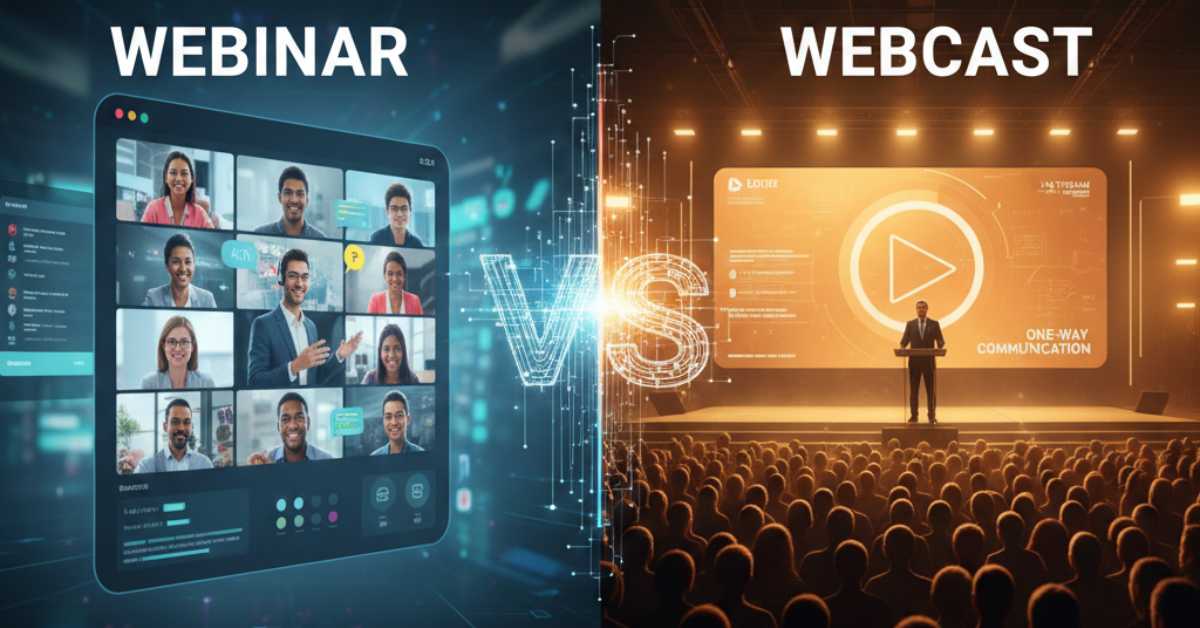
With the digital communication still transforming the way companies, teachers and institutions interact with their followers, online events now represent a strategic element of contemporary communication. Webinars and webcasts are among the most used formats. These terms are mostly used interchangeably but they are used in different contexts and to appeal to different audience and other purposes. To make the right choice of format and make your online event as useful as it can be, it is necessary to learn the distinction between webinar vs webcast.
Both webinars and webcasts provide the facility of information sharing via remote means by the presenters, restriction of geographical boundaries, and expansion of the material distant regions. Nonetheless, their structure, scale, degree of interactivity and the general experience they offer can differ significantly. This general guide will discuss the idea of webinar vs webcast in a closer environment, defining what they are, their features, their benefits, their shortcomings, applications, and how to use the most appropriate of the two in your business or organization.
Knowing the difference Webinar vs Webcast.
On high level, both the webinars and webcasts are virtual events that are registered via the internet and are intended to provide connectivity between speakers and their audiences in real time or on demand. They are extensively applied in marketing, corporate communications, education and PR. These similarities notwithstanding, the underlying distinction between webinar vs webcast is the interaction of the audiences with the presenters and the amount of people that the event will target.
The best way to define a webinar is an online seminar that is interactive, involves discussion and participation. A webcast on the contrary is similar to live TV broadcast and is focused on scale, reach, and quality production. The initial step to deciding on which format to use would be to appreciate this and the differences between them.
What Is a Webinar?
It is notable that to clearly see the struggle of webinar vs webcast, complications need to be defined with a clear meaning of a webinar. Webinar derives its name by combining the words web and seminar and this meaning fits the purpose. A webinar is an online conference that allows the interlocutors to communicate in real-time.
Webinars typically consist of a presentation on a few slides, showing the screens, live or taped video or web camera shots with an audio, typically in the form of a microphone or telephone. They are normally organized by a single presenter or by a small team of speakers and are geared towards educating, informing or training a defined group of people.
This is because the webinars are typically conducted with relatively smaller participants, which are in most cases less than 1,000. This is an acceptable size to have some form of significant interaction and engagement and thus, the webinars come the most appropriate in knowledge sharing, professional development, and nurturing of the leads.
Significant Webinar qualities.
One of the key factors in the comparison between the webinar and the webcast is interactivity, which is one of the primary features of the webinars. Webinars are structured in a manner that two way communication is strengthened and the participants can participate in the process and not as a passive consumer of the information.
Live question and answer sessions will offer the participants the opportunity to ask questions and vote in polls and surveys, download shared materials, and chat with presenters. Such engagement also makes it more intimate and the presenters are able to tailor their content based on the audience feedback in real time.
The webinars may be presented in real time, recorded and watched on demand, or in a hybrid mode, which will include both. This is what makes webinars a very versatile tool in the case of an organization that needs to present educational or promotional content in an efficient manner.
Benefits of Webcasts
Webcasts offer several advantages, particularly for organizations that need to communicate with large audiences. One of the most significant benefits is scalability. A single webcast can reach tens of thousands of viewers across the globe, making it ideal for global announcements and high-visibility events.
The professional production quality of webcasts also enhances brand perception. A well-executed webcast reflects positively on an organization’s image and reinforces credibility. Additionally, webcasts make it possible to extend the reach of physical events by streaming them online, overcoming venue limitations and reducing travel-related costs and environmental impact.
Limitations of Webcasts
While webcasts excel in reach and professionalism, they are not without drawbacks. Higher production costs and technical requirements can make webcasts more expensive and complex to execute than webinars. Additionally, the limited interactivity can result in lower engagement levels, particularly for audiences that prefer participatory experiences.
Because webcasts are designed for mass communication, they may also feel less personal, which can be a disadvantage for use cases that require discussion, collaboration, or feedback.
Webinar vs Webcast: A Detailed Comparison
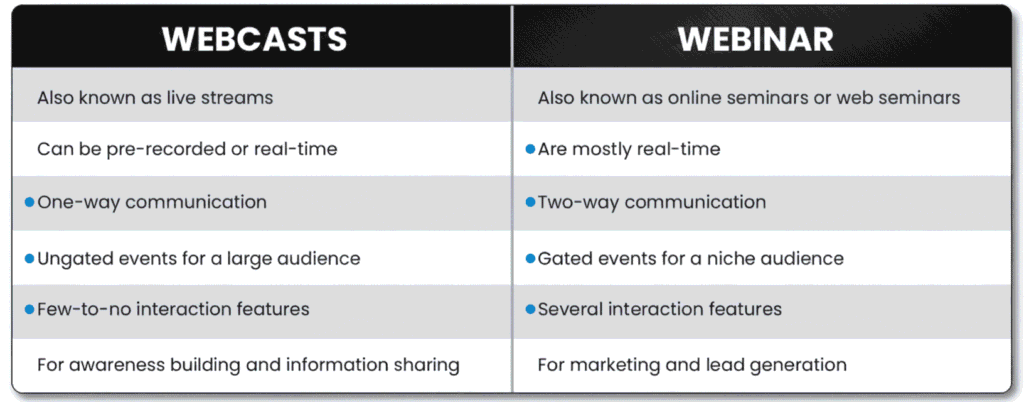
When comparing webinar vs webcast, several key factors come into play, including audience size, interactivity, production quality, and purpose. Webinars are best suited for smaller, targeted audiences where engagement and discussion are priorities. Webcasts, on the other hand, are ideal for large-scale communication where consistency and reach are more important than interaction.
Webinar vs Webcast Use Cases
The choice between webinar vs webcast often depends on how the format will be used. Webinars are particularly effective for internal training sessions, customer education programs, sales presentations, and professional development initiatives. Their interactive nature makes them well-suited for scenarios where feedback and participation are essential.
Webcasts are better suited for large-scale events such as virtual conferences, product launches, company-wide updates, and annual reviews. They provide a consistent message to a broad audience and ensure that content is delivered professionally and efficiently.
Webinar vs Webcast in Marketing
From a marketing perspective, understanding webinar vs webcast can significantly impact campaign success. Webinars are commonly used in lead generation and nurturing strategies, as they allow marketers to engage directly with prospects and guide them through the buyer’s journey.
Webcasts, by contrast, are more effective for building brand awareness and reaching a wider audience. They are often used to support major announcements or thought leadership initiatives that require broad visibility.
Webinar vs Webcast in Corporate Communication
In corporate environments, both formats play important roles. Webinars are ideal for team training, workshops, and interactive meetings, while webcasts are better suited for executive announcements, company town halls, and global communications. Choosing the right format ensures that messages are delivered effectively and resonate with the intended audience.
Where Virtual Events Fit In
The discussion of webinar vs webcast would not be complete without addressing virtual events. Virtual events are comprehensive online experiences that often combine both webinars and webcasts within a single platform. For example, a virtual conference may use webcasts for keynote sessions and webinars for breakout workshops.
By leveraging the strengths of both formats, virtual events provide a flexible and immersive experience that can accommodate a wide range of objectives and audience needs.
How to Choose Between Webinar and Webcast
Selecting between a webinar and a webcast requires careful consideration of your goals, audience size, budget, and desired level of interaction. If engagement, discussion, and personalization are priorities, a webinar is likely the best choice. If scale, professionalism, and consistent messaging are more important, a webcast may be the better option.
In many cases, organizations find that using both formats strategically allows them to maximize impact and reach.
Conclusion: Webinar vs Webcast
The debate of webinar vs webcast is not about determining which format is superior, but rather about understanding which one best aligns with your specific objectives. Webinars excel in engagement and interaction, making them ideal for education and lead nurturing. Webcasts shine in scale and professionalism, making them the preferred choice for large-scale communication and high-visibility events.
By understanding the differences, benefits, and limitations of each format, you can confidently choose the right approach and deliver impactful online experiences that meet your business goals.
- Lactose Free Cheese: The Complete Guide to Enjoying Cheese Without the Discomfort
- Best Golf Balls for High Handicappers in 2026: The Buying Guide for Beginners and Average Golfers
- Typing.com Review: Is It Really the Best Free Way to Learn Touch Typing in 2026?
- Climate Controlled Storage 101: Everything You Need to Know Before Renting a Temperature Controlled Storage Unit
- When Was Running Invented? The Surprising History of Humanity’s Oldest Sport