
Picture this: you carefully pack grandma’s antique dresser, seal a few boxes of family photos, and tuck everything into a storage unit for six months. When you come back, the wood has warped, the photos are stuck together, and there’s a faint smell of mildew you just can’t shake. Sound familiar?
That exact scenario is why climate controlled storage exists — and why so many people now search for a climate controlled storage unit before they trust their belongings to any facility. If you’ve ever typed “storage units near me with climate control” into Google at 11 p.m. while stressing about your leather couch, this guide is for you.
Quick answer: Climate controlled storage (also called temperature controlled storage) keeps your unit within a regulated temperature range — usually between 55°F and 85°F — and controls humidity levels to protect sensitive items from heat, cold, moisture, and mold. It costs more than standard storage, but for certain belongings, it’s the difference between “preserved” and “ruined.”
Let’s break down exactly what it is, who needs it, and how to find the right unit without overpaying.
What Is Climate Controlled Storage, Exactly?
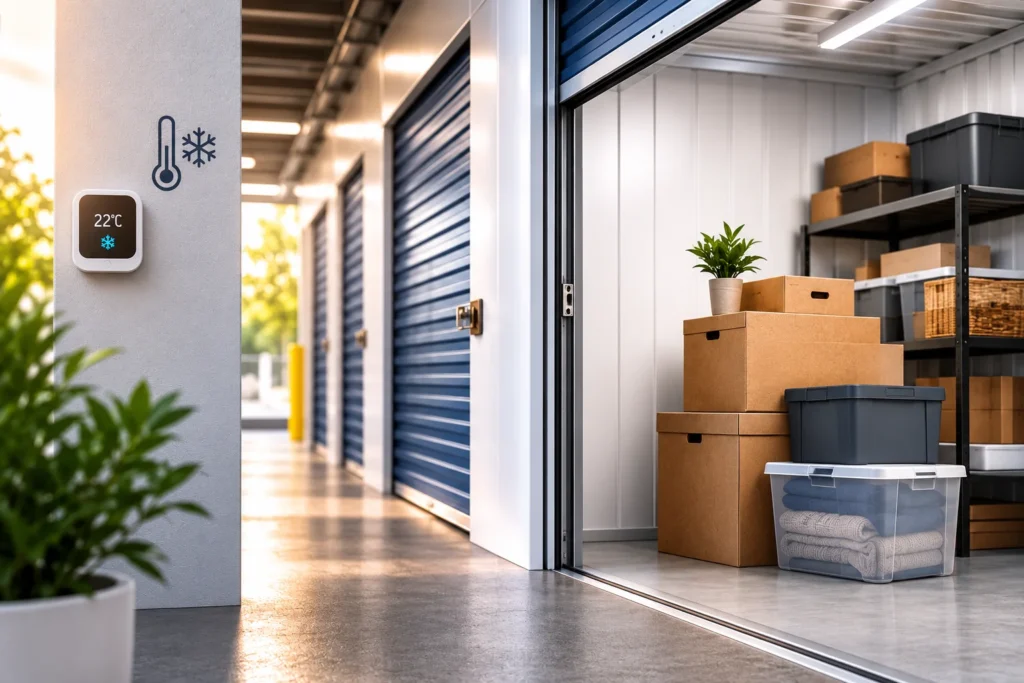
Climate controlled storage is a type of storage unit — usually housed indoors, inside an insulated building — where the temperature and humidity are actively monitored and adjusted. Instead of sitting in a metal container that swings from freezing in January to sweltering in July, your belongings stay in a stable, moderate environment year-round.
Standard storage units are basically insulated boxes. They keep rain and wind out, but they don’t fight condensation, humidity spikes, or temperature extremes. In a climate control storage unit, HVAC systems keep conditions consistent, which matters enormously for anything that can crack, warp, rust, mold, or fade.
Climate Control Storage vs. Temperature Controlled Storage: Is There Really a Difference?
Most facilities use these terms interchangeably, and for everyday renters, they mean the same thing. But there’s a subtle distinction worth knowing:
- Temperature controlled storage typically refers to units that only regulate temperature, keeping things within a set range (say, 55°F–85°F) without necessarily managing humidity.
- True climate controlled storage manages both temperature and humidity, which is the bigger threat to most household items. Humidity — not heat — is what actually causes mold, mildew, warping, and rust.
When you’re comparing facilities, don’t just ask “is it climate controlled?” Ask specifically: “Do you control humidity, or just temperature?” That one question separates a good facility from a great one.
Who Actually Needs a Climate Controlled Storage Unit?
Not everyone does — and that’s okay, because it’s a premium feature. But if you’re storing any of the following, a climate controlled storage unit isn’t a luxury, it’s protection:
- Electronics — TVs, computers, gaming consoles, and speakers can suffer internal condensation damage in humid, unregulated units
- Wood furniture and antiques — extreme heat and cold cause wood to expand, contract, crack, and warp over time
- Photographs, documents, and books — paper absorbs moisture fast, leading to sticking, mold, and irreversible damage
- Musical instruments — guitars, pianos, and violins are notoriously sensitive to humidity swings
- Artwork and collectibles — canvas, frames, and vintage items degrade quickly outside stable conditions
- Leather goods and clothing — heat and moisture invite mildew and cracking
- Wine and specialty collections — temperature stability is non-negotiable for preservation
- Medical supplies or equipment — many require storage within specific temperature ranges
If your storage list is mostly patio furniture, tools, and holiday decorations, standard storage will likely do the job fine. But if it includes anything from the list above, climate control earns its keep.
7 Signs You Need Climate Controlled Self Storage
Still on the fence? Ask yourself these questions:
- Are you storing items for more than a few months?
- Does your local climate swing between very hot summers and very cold winters?
- Are any items made of wood, leather, paper, or fabric?
- Do you have electronics, instruments, or artwork in the mix?
- Is the storage facility located somewhere humid or coastal?
- Would replacing these items cost more than a few months of premium storage?
- Do you plan to store sentimental or irreplaceable items, like family heirlooms or photo albums?
If you answered “yes” to two or more, climate controlled self storage is worth the extra monthly cost. Think of it as insurance for things insurance can’t actually replace.
Read more: When Was Running Invented? The Surprising History of Humanity’s Oldest Sport
How to Find Storage Units Near Me With Climate Control
Searching “storage units near me with climate control” pulls up dozens of options — but not all “climate controlled” facilities are created equal. Here’s how to actually vet them:
- Ask for the specific temperature range. A reputable facility can tell you exactly what range they maintain (ideally 55°F–85°F), not just “we keep it comfortable.”
- Ask if humidity is controlled, not just temperature. As mentioned above, this is the detail that separates decent facilities from excellent ones.
- Tour the facility in person if possible. Walk into a unit. Does it feel noticeably different from the outside temperature? Is there any musty smell?
- Check insulation and building type. Indoor, fully enclosed units perform better than drive-up units with partial climate control.
- Read recent reviews specifically mentioning climate control. Look for complaints about mold, humidity, or inconsistent temperatures.
- Ask about backup power. HVAC systems fail during outages — ask what happens to the unit’s climate control if the power goes out.
- Confirm pest control practices. Climate controlled buildings should also have strict pest management, since stable conditions can attract pests looking for shelter too.
A quick phone call with these questions ready will filter out facilities that slap “climate controlled” on their sign without actually delivering on it.
Climate Controlled Storage Unit Cost: What Drives the Price
Climate controlled storage typically costs more than standard units — generally somewhere in the range of 20% to 50% more, depending on your market. A few factors shape that price:
- Unit size — larger units cost more to heat, cool, and dehumidify
- Location — climate controlled units in humid or extreme-climate regions often cost more due to higher HVAC demand
- Building type — indoor, multi-story facilities with full climate control tend to be pricier than drive-up units with partial temperature regulation
- Demand and season — storage pricing fluctuates like most real estate, with tighter availability in summer moving months
While it’s tempting to default to the cheapest option, weigh the cost against what you’re protecting. A $30-a-month price difference is easy math against a warped antique or ruined electronics.
How to Pack Your Belongings for Climate Controlled Storage
Even in a climate controlled unit, smart packing extends protection further:
- Use plastic bins instead of cardboard boxes, which absorb moisture over time
- Wrap wood furniture in breathable moving blankets rather than plastic, which can trap condensation
- Store important documents and photos in sealed, moisture-resistant containers
- Leave a small gap between items and the walls for airflow
- Use silica gel packs inside sensitive electronics boxes for extra humidity protection
- Elevate items slightly off the floor using pallets or shelving
FAQs: Climate Controlled Storage, Answered
What temperature is climate controlled storage kept at?
Most facilities maintain a range between 55°F and 85°F, with many aiming closer to 65–80°F for optimal protection.
Is climate controlled storage worth the extra cost?
For sensitive items like electronics, wood furniture, documents, instruments, or artwork, yes — the added monthly cost is typically far lower than the cost of replacing or restoring damaged belongings.
What’s the difference between climate controlled and non-climate-controlled storage?
Standard storage units are only insulated, meaning temperature and humidity fluctuate with the outside weather. Climate controlled units actively regulate both, keeping conditions stable year-round.
Can climate controlled storage prevent mold and mildew?
It significantly reduces the risk by controlling humidity, which is the primary cause of mold growth. Proper packing (using bins instead of cardboard, allowing airflow) further reduces risk.
How do I find the best storage units near me with climate control?
Search locally, then call ahead to confirm the facility controls both temperature and humidity, ask about their specific range, and read recent reviews before booking a tour.
The Bottom Line
Temperature controlled storage and climate controlled storage aren’t just buzzwords on a rental brochure — they’re the difference between belongings that come out of storage exactly as they went in, and ones that come out damaged, moldy, or warped. If you’re storing anything sentimental, valuable, or sensitive to heat and humidity, don’t gamble on a standard unit to save a few dollars a month. Do a little homework, ask the right questions, and choose a facility that actually delivers on the climate control promise — your future self (and your antique dresser) will thank you.