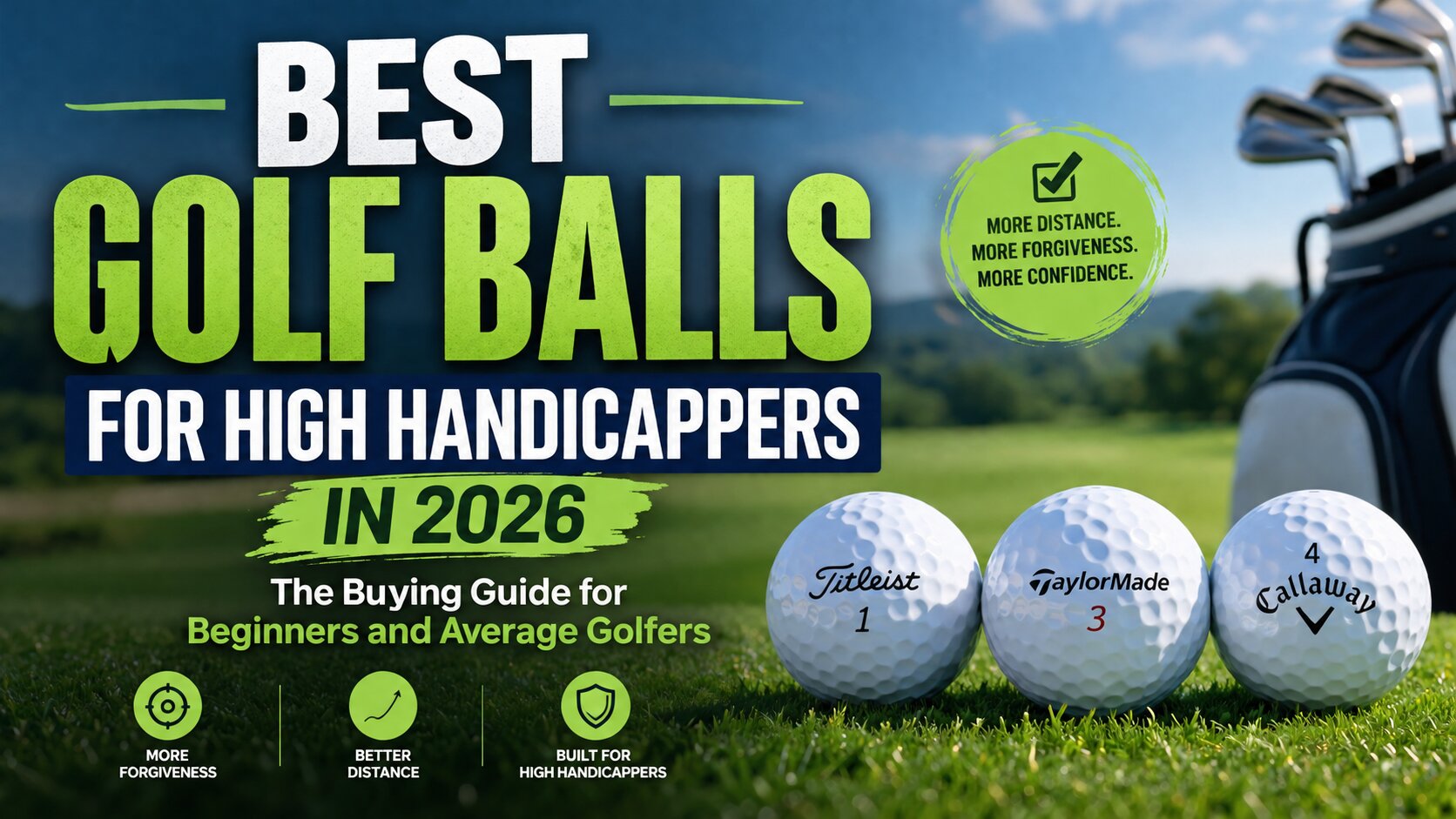
Quick answer: If you’re a high handicapper, beginner, or average golfer, the best golf ball for your game is a low-compression, two- or three-piece ball with a forgiving core and a durable ionomer (or hybrid) cover — not a premium tour ball. Standout picks for 2026 include the Callaway Supersoft for pure forgiveness, the Vice Drive for budget-friendly distance, and the Bridgestone e6 for golfers who want a little more short-game feel without the tour-ball price tag.
Here’s the truth nobody at the pro shop tells you: the golf ball sitting in Rory McIlroy’s bag might actually be costing you strokes. Tour balls are engineered for swing speeds most weekend golfers simply don’t have. If your driver swing sits between 70 and 95 mph — which covers the vast majority of recreational players — a firm, high-compression ball can quietly steal 10 to 15 yards off every drive and add unwanted side spin that turns a slight miss into a hunt through the trees.
The good news? Fixing this doesn’t require lessons, a new driver, or hours on the range. It requires picking the right ball. Let’s break down exactly what that looks like.
Why the Right Ball Matters More Than You’d Think
According to recent USGA handicap data, the average handicap index in the U.S. sits at roughly 14 for men and high-20s for women, while the National Golf Foundation estimates the average 18-hole score across all golfers lands around the low-to-mid 90s. Put simply: most people playing golf today are exactly who this guide is written for — golfers who want more fairways, fewer lost balls, and a scorecard that doesn’t make them wince.
Independent launch-monitor testing has consistently shown that golfers swinging under 90 mph get more ball speed, more carry, and straighter flight from a soft, low-compression ball than from a firm one. Compression isn’t a marketing buzzword — it’s the difference between a ball that springs off your clubface and one that just sits there absorbing your effort.
At a Glance: Top Golf Balls for High Handicappers, Beginners & Average Golfers
| Category | Ball | Compression | Construction | Best For |
|---|---|---|---|---|
| Best Overall | Callaway Supersoft | Ultra-low (~38) | 2-piece | Maximum forgiveness, easy launch |
| Best for Beginners | Wilson Duo Soft | Low (~40) | 2-piece | First-time players, slow swings |
| Best Value | Vice Drive | Low-mid | 2-piece | Budget-conscious golfers who lose balls |
| Best Feel & Short Game | Bridgestone e6 | Mid | 2-piece | Average golfers wanting more control |
| Best for Distance | Titleist Velocity | Mid-high | 2-piece | Golfers chasing extra yards |
| Best for Visibility | TaylorMade SpeedSoft Ink | Low-mid | 3-piece | Alignment and ball-tracking |
| Best Premium Upgrade | Kirkland Signature (3-piece) | Mid | 3-piece urethane | Improving players wanting more spin |
What Actually Makes a Golf Ball “Forgiving”?
Before you buy a dozen, it helps to understand the four factors that separate a golf ball built for beginners and high handicappers from one built for scratch golfers.
Compression. This measures how much a ball deforms at impact. Low-compression balls (roughly 35–70) compress easily even at modest swing speeds, transferring more energy into ball speed. If your driver swing is under 90 mph — true for most beginners, high handicappers, and average golfers — low compression is almost always the better fit.
Construction. Two-piece balls (a large core plus a durable cover) are the simplest design: they launch high, resist scuffing, and keep spin low, which helps straighten out slices and hooks. Three-piece balls add a middle mantle layer for more short-game feel, usually at a slightly higher price.
Cover material. Ionomer (sometimes branded Surlyn) covers are firm, durable, and low-spin — ideal if you lose balls often or fight a slice. Urethane covers are softer and grip the clubface more on wedge shots, which improving players appreciate but beginners rarely need yet.
Spin behavior. For high handicappers, less spin off the driver generally means straighter, more predictable flight. A little extra spin near the green, however, still helps stop the ball on the putting surface — the best beginner-friendly balls balance both.
The Best Golf Balls for High Handicappers, Beginners & Average Golfers in 2026
Best Overall: Callaway Supersoft
The Supersoft has earned its reputation for one simple reason — it’s almost impossible to mishit badly. Its ultra-low compression core gets airborne easily even on a slower swing, and the two-piece design keeps unwanted side spin in check, so those slices and hooks shrink instead of ballooning into the rough. It’s the ball we’d hand a brand-new golfer or a lifelong high handicapper without a second thought.
Best for Beginners: Wilson Duo Soft
Marketed as one of the softest balls on the market, the Duo Soft is built specifically for players still learning to generate clubhead speed. The forgiving core helps first-timers see real distance gains without needing a perfect strike, and the price point means losing a few in the water hazard won’t sting.
Best Value: Vice Drive
If you’re the golfer who finishes a round having donated three balls to the woods, the Vice Drive solves that problem affordably. Its durable, cut-resistant cover holds up to mishits and cart-path scuffs, while the low-compression core still delivers respectable distance — a smart everyday-play ball for anyone who prioritizes value over polish.
Best Feel & Short Game: Bridgestone e6
The e6 splits the difference nicely between distance and control. Average golfers who’ve moved past the absolute beginner stage often like this ball because it still launches easily but offers a touch more greenside spin than a pure distance ball, helping shots hold the green instead of skipping through it.
Best for Distance: Titleist Velocity
When yardage is the priority, the Velocity is a proven performer. Its higher-compression core (relative to the others on this list) rewards a bit more swing speed, making it a strong choice for average golfers who’ve developed some consistency and want every extra yard they can get off the tee.
Best for Visibility: TaylorMade SpeedSoft Ink
Losing track of your ball mid-flight is a uniquely frustrating beginner problem. The SpeedSoft Ink’s bright, multicolored finish makes it dramatically easier to follow in the air and spot in the rough, while the soft compression keeps performance beginner-friendly.
Read more: Typing.com Review
Best Premium Upgrade: Kirkland Signature (3-Piece Urethane)
For the average golfer ready to dip a toe into urethane-cover performance without paying tour-ball prices, Kirkland’s three-piece ball is the value darling of the golf world. It introduces better greenside spin and a softer feel — a natural next step once you’ve outgrown pure beginner balls.
How to Choose the Right Ball for Your Game
Ask yourself three quick questions:
- How’s your swing speed? Under 90 mph with the driver — go low compression. Not sure? Assume you are; most recreational golfers overestimate their speed.
- How often do you lose balls? Frequently — prioritize a durable, budget-friendly ionomer cover over a pricier urethane one.
- What’s your biggest miss? A slice or hook — a low-spin two-piece ball will straighten your dispersion. Struggling to hold greens — look for a three-piece option with a bit more short-game bite.
Once you find a ball that fits, stick with it for a full season. Constantly switching golf balls make it nearly impossible to build the feel and distance control that actually lower your scores.
Frequently Asked Questions
What golf ball should a high handicapper use? High handicappers generally play their best with low-compression, two-piece golf balls featuring a durable ionomer cover. This combination maximizes distance at slower swing speeds while minimizing the side spin that turns small misses into big ones.
What’s the best golf ball for beginners? Beginners should prioritize affordability and forgiveness over performance features like spin control. A soft, low-compression two-piece ball — such as the Callaway Supersoft or Wilson Duo Soft — makes it easier to get the ball airborne and keeps costs low while you’re still losing balls regularly.
What golf ball is best for an average golfer? Average golfers (roughly 15–25 handicap) often benefit from stepping up to a ball with slightly more short-game control, like the Bridgestone e6, once their ball-striking becomes more consistent — without jumping straight to a premium tour ball.
Are soft or hard golf balls better for a high handicapper? Soft, low-compression golf balls are almost always the better choice for high handicappers. They compress more efficiently at slower swing speeds, which improves both distance and consistency compared to firmer, tour-level balls.
Do expensive golf balls actually help beginners play better? Not usually. Premium tour balls are engineered for high swing speeds and advanced short-game control that most beginners can’t yet take advantage of. A well-matched budget or mid-range ball will typically outperform a premium ball for a developing player.
The Bottom Line
You don’t need a $5-a-ball tour box to play better golf — you need a ball that’s actually built for your swing. For most high handicappers, beginners, and average golfers, that means going soft, going low-compression, and letting go of the idea that the pros’ equipment is the goal. Match the ball to your game, and the extra yards and straighter shots tend to follow on their own.