
Introduction: Can Lactose-Intolerant People Eat Cheese?
If you have ever had to skip the cheese board at a dinner party or regretted that extra slice of pizza, you already know the frustrating reality of lactose intolerance. Bloating, cramping, and digestive discomfort can turn a simple pleasure into a painful experience. But here is the good news: lactose free cheese exists, it is widely available, and — more importantly — it tastes remarkably close to the real thing.
According to the National Institutes of Health, approximately 68% of the global population has some form of lactose malabsorption. Yet the global cheese market continues to grow, which tells us one thing clearly: people are not giving up cheese — they are finding smarter ways to enjoy it. This comprehensive guide covers everything you need to know about lactose free cheese, from how it is made to the best types, cooking tips, and answers to the most common questions.
What Is Lactose Free Cheese?
Lactose free cheese is cheese that has either had its lactose content removed or significantly reduced, making it safe and digestible for people who struggle to break down lactose — a natural sugar found in dairy. Lactose is broken down in the body by an enzyme called lactase. When the body does not produce enough lactase, undigested lactose ferments in the gut and causes the uncomfortable symptoms associated with lactose intolerance.
Manufacturers create lactose free cheese in one of two ways:
1. Adding lactase enzyme directly to the milk before cheese production, which pre-digests the lactose into simpler sugars (glucose and galactose).
2. Using an ultrafiltration process that physically separates and removes lactose from the milk before processing.
The result is a product that retains the same protein, fat, calcium, and flavour profile as regular cheese — minus the digestive distress.
Are Some Cheeses Naturally Lactose Free?
Yes — and this surprises many people. The cheesemaking process itself dramatically reduces lactose levels, especially in aged varieties. During aging, bacteria consume most of the lactose to produce lactic acid. The longer a cheese ages, the lower its lactose content. Many hard, aged cheeses are virtually lactose-free without any special processing.
| Cheese Type | Lactose Level | Safe for Most LI People? |
|---|---|---|
| Parmesan (24+ months) | < 0.1 g/100g | ✅ Yes |
| Aged Cheddar (12+ months) | Trace amounts | ✅ Yes |
| Gruyère | < 0.1 g/100g | ✅ Yes |
| Brie / Camembert | Low but present | ⚠️ Varies |
| Mozzarella (fresh) | Moderate | ⚠️ Varies |
| Cottage Cheese | High (~3 g/100g) | ❌ Often not |
| Ricotta | High (~3–4 g/100g) | ❌ Often not |
Best Types of Lactose Free Cheese
Whether you are buying purpose-made lactose free cheese or choosing naturally low-lactose varieties, here are the best options available:
1. Lactose Free Cheddar
Cheddar is one of the most beloved cheeses in the world, and the lactose free version delivers the same sharp, tangy flavour with none of the lactose. It melts beautifully, making it ideal for grilled cheese sandwiches, macaroni and cheese, and cheese sauces. Many brands now offer lactose free cheddar in mild, medium, and sharp varieties.
2. Lactose Free Mozzarella
Fresh mozzarella contains moderate amounts of lactose, but lactose free mozzarella is widely available and stretches and melts just like the original. It is perfect for homemade pizzas, caprese salads, and pasta bakes. Look for brands that specifically label their product as lactose free, or opt for aged, low-moisture mozzarella, which has significantly lower lactose content.
3. Parmesan and Pecorino Romano
Both of these hard Italian cheeses are aged for extended periods, resulting in extremely low lactose content — often below 0.1 grams per 100 grams. They are considered safe for most lactose-intolerant individuals and add a rich, umami depth to pasta dishes, risottos, and salads. Grate them fresh for maximum flavour.
4. Aged Swiss and Gruyère
These classic Swiss cheeses undergo a long aging process that eliminates virtually all lactose. Gruyère, in particular, is a favourite for fondue and French onion soup. Its nutty, complex flavour profile makes it one of the most versatile cheeses for cooking.
5. Lactose Free Cream Cheese
For those who love bagels, cheesecakes, and creamy dips, lactose free cream cheese is a game-changer. Several major brands now produce it using lactase enzyme treatment, and the texture and taste are nearly indistinguishable from regular cream cheese.
Read more: Best Golf Balls for High Handicappers in 2026: The Buying Guide for Beginners and Average Golfers
How to Read Labels and Choose the Right Product
Navigating the dairy aisle when you are lactose intolerant requires a bit of label literacy. Here is what to look for:
Look for the “Lactose Free” label. Products certified as lactose free contain less than 0.01% lactose — well below the threshold that triggers symptoms in most people.
Check the sugar content. Lactase-treated cheeses may show slightly higher simple sugars (glucose and galactose) on the label. This is normal and expected — it does not mean the product contains added sugar.
Prioritise hard, aged cheeses. If no explicit lactose free label is present, opt for cheeses aged 12 months or longer. The aging process does most of the work naturally.
Avoid processed cheese slices. These often contain whey and other dairy derivatives that may add lactose back into the product.
Organic vs conventional. Lactose content is not affected by whether cheese is organic — focus on aging time and processing method instead.
Cooking with Lactose Free Cheese: Tips and Ideas
Lactose free cheese behaves almost identically to its traditional counterpart in cooking. Here are some practical tips to get the best results:
Melting: Lactose free cheddar and mozzarella melt smoothly. For the creamiest results, grate the cheese yourself rather than buying pre-shredded varieties, which often contain anti-caking agents that affect melt quality.
Baking: Lactose free cream cheese works seamlessly in cheesecakes, muffins, and savoury pastries. No recipe adjustments are needed.
Topping dishes: Parmesan and Pecorino Romano are naturally low in lactose and make excellent finishing touches on pasta, soups, and salads.
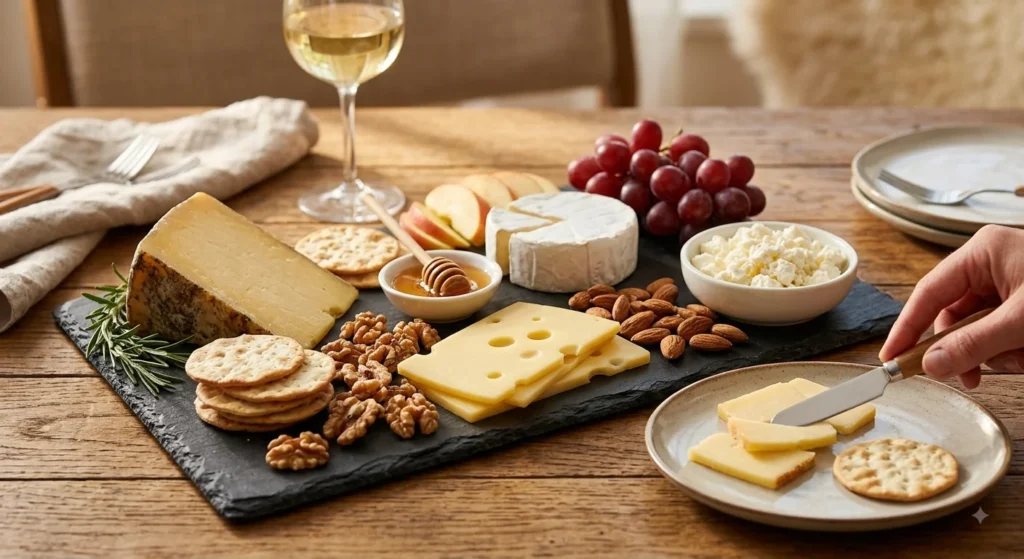
Cheese boards: Build a stunning lactose-friendly board with aged cheddar, Gruyère, Manchego, and Parmigiano-Reggiano — all are low-lactose or lactose free by nature.
Substitutions: When a recipe calls for ricotta (higher in lactose), try drained lactose free cottage cheese or a lactose free ricotta alternative for a similar texture.
Nutritional Value of Lactose Free Cheese
One of the most common misconceptions about lactose free cheese is that it is nutritionally inferior to regular cheese. This is simply not true. The lactose removal process does not affect the protein, fat, or calcium content of the cheese. Gram for gram, lactose free cheese delivers the same nutritional benefits: high calcium for bone density, rich protein for muscle repair and satiety, essential vitamins including B12, A, and K2, and healthy fats that support brain function. It is also naturally low in carbohydrates, making it suitable for low-carb and ketogenic diets.
The only minor nutritional difference is that lactase-treated cheeses contain slightly more simple sugars due to the pre-broken-down lactose. However, the caloric difference is negligible and has no meaningful impact on overall dietary intake.
Frequently Asked Questions About Lactose Free Cheese
Is lactose free cheese completely dairy free?
No. Lactose free cheese is still made from dairy milk. It is suitable for people with lactose intolerance but not for those with a dairy allergy or who follow a vegan diet. If you need a completely dairy-free option, look for vegan cheese alternatives made from cashews, almonds, coconut, or soy.
Does lactose free cheese taste different?
In most cases, the taste difference is minimal to non-existent. Lactase-treated cheeses may have a very slightly sweeter undertone due to the broken-down sugars, but most people find the flavour indistinguishable from regular cheese. Naturally aged, low-lactose cheeses taste exactly the same as their conventional versions.
Can you make lactose free cheese at home?
Yes. You can add commercially available lactase drops to regular milk before making cheese at home. Allow the lactase to work for 24 hours in the refrigerator before proceeding with your recipe — a great option for those who enjoy artisanal cheesemaking.
Is lactose free cheese more expensive?
Purpose-made lactose free cheese products can be slightly more expensive than conventional varieties, typically by 10–20%. However, naturally aged cheeses like Parmesan, aged Cheddar, and Gruyère are naturally low in lactose and priced comparably to their standard counterparts.
How much lactose is in lactose free cheese?
Products labelled lactose free typically contain less than 0.1 grams of lactose per 100 grams — well below the threshold that triggers symptoms in most lactose-intolerant individuals. Hard, aged cheeses naturally contain trace amounts in the same range.
Conclusion: Cheese Is Back on the Menu
Lactose intolerance no longer has to mean a life without cheese. With purpose-made lactose free cheese products now widely available across supermarkets, specialty stores, and online retailers — and a wide selection of naturally low-lactose aged cheeses in every cheese section — the options have never been better.
Whether you reach for a block of lactose free cheddar for your next grilled cheese, dust Parmesan over a bowl of pasta, or impress guests with a naturally low-lactose cheese board, you can enjoy every bite without worrying about the aftermath. The key is knowing which cheeses work for your body and making informed choices at the dairy counter.
Explore, experiment, and most importantly — enjoy. Because great cheese deserves to be savoured by everyone.